
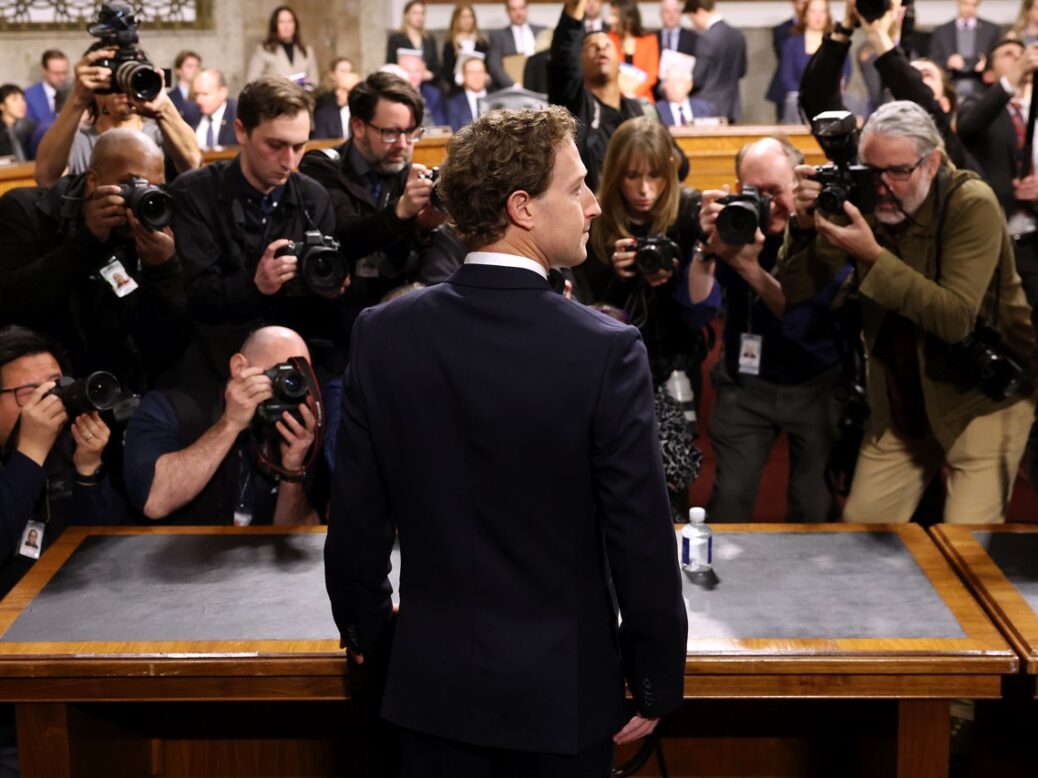
Social media has become such a perfect antagonist I almost have to admire it. There is no one reading this article, and certainly no one writing it, who can’t think of multiple harms caused via social media in its current forms, from the incentivisation of clickbait that’s led to the collapse of information around every conceivable moral or political issue, to those companies’ own surveillance, tracking and scamming of their users, to the blind eye shown to all manner of safety issues, including racist and violent content. These are real harms and, moreover, things for which companies like Meta, Google and X should be held accountable. As such, the sight of Zuckerberg leaving court, $400+ million poorer and with a face like a slapped arse, was not exactly tragic. “It would”, to quote Oscar Wilde, “take a heart of stone not to laugh”.
The problem, however, is in the fine print. The two cases Meta lost on Tuesday (one in California and one in New Mexico) relate to distress caused to teens and their families because of “social media addiction” and charges that the intrinsic design of Meta’s platforms – primarily Facebook and Instagram – allow and even encourage this distress. The remedy such rulings universally lean toward is greater censure of “harmful” materials and the institution of age verification procedures, measures increasingly in vogue among lawmakers and lobbyists on both sides of the Atlantic in the past few years.
Central to the New Mexico prosecution were the insufficiently robust protections against child predation in Meta’s messaging apps. They proved this by sharing images of children with paedophiles through these services, raising questions of which children’s images they sent, and if consent or legal reporting was involved at any point. Leaving aside the jaw-dropping recklessness of these acts for one second, one is left wondering how the ruling’s most common interpretation among its boosters – that age verification statutes be mandated – would possibly help here. How, precisely, are age limits meant to stop adults from sending pictures of children, without their consent, to other adults? Here in the UK, we may see an echo of this incoherence in technology secretary Peter Kyle claiming that adults using age verification are keeping children safe. To which the only reasonable response is: how, exactly? The ongoing rush to ban social media for kids following the murder of Brianna Ghey – a teen who found her community online, before being killed, in real life, at the hands of transphobic bullies – leaves out how such a ban would stop this happening to another trans teen. The only plausible link, that consistent use of social media makes one transphobic and thus a danger to trans kids, seems unlikely to be what they mean, since this would require a social media ban for 80 per cent of this country’s broadsheet journalists and the entirety of the government’s front bench.
The vast, vast majority of those negatively affected by this precedent will be smaller platforms and websites currently publishing the kinds of content already being targeted by far right movements: pro-LGBT content, especially that related to trans rights, websites related to anti-racism, feminism or political progressivism, and material related to, or documenting, what’s happening in Gaza. We know this because those celebrating this precedent are the very same groups who have lobbied, with less success, to ban exactly this material through other means.

US Senator Marsha Blackburn called it a “monumental victory”, before using the news as a rallying cry to implement the Kids Online Safety Bill (KOSA) she has co-sponsored in congress, a bill whose aim she’s claimed is to save kids from “The Transgender”, having previously lambasted TikTok as “pro-Hamas” for broadcasting footage from Gaza. The group National Council on Sexual Exploitation (NCOSE) joined her in touting the judgment as a reason to pass KOSA, and “ensure digital platforms are designed with child safety in mind”. Seeing as NCOSE have previously connected gay marriage to mass murders, it shouldn’t be hard to guess what kind of material they’re keen to keep children safe from. (If you’ve not heard of NCOSE, you may have heard of Covenant Eyes, the “accountability” app Speaker of the House Mike Johnson uses to monitor he and his son’s porn-watching habits. It was founded by former NCOSE chair Ron deHaas, who stood down from that position last September, when his stepson was himself charged with felony child sexual abuse).
If one needed any other sign that this “victory against Big Tech” was anything but, consider that some of the US pressure groups currently celebrating the Meta loss are themselves funded by Meta. This might be because Meta, who can take a bath on $400 million in their sleep, stand at the vanguard of all the new, highly profitable measures that this raft of censorship may bring. Age verification bills don’t hurt Zuckerberg, as tech reporter Taylor Lorenz makes clear, since Meta do not profit nearly so much from the content they host as they do from data harvesting. Since engagement with content on their platforms has begun to plateau and even dip, accelerating the push for their age verification technology may not represent a curtailment, but a revenue diversification.
We should weep few tears for Meta, who have absolutely committed vast wrongs, both by neglect of duty and in actively encouraging, and capitalising on, their users’ worst impulses. It’s just that those harms can, and should, be usefully countered with better moderating, and through policy changes which tackle the issues at their source, rather than handing a legal precedent to governments and pressure groups that they can scrub any content they deem harmful from the internet. All under the guide of protecting children, via means which seem ill-tailored to do even that.
That the leviathans of Big Tech have used their vast wealth and influence to profit from misery, abuse, even child endangerment, is true, and truly appalling. We should simply be wary of cheering while they use this same wealth and influence to construct their own media narrative of how they, and we, should be punished for their failures, in conjunction with the very ghouls whose professed concern for child safety we should dismiss as the clickbait it is.
[Further reading: AI will not save us]
Content from our partners


Related



Join the debate
Subscribe here to comment